Why we love old movie locations — especially the Iverson Movie Ranch

For an introduction to this blog and to the growing interest in historic filming locations such as the Iverson Movie Ranch — the most widely filmed outdoor location in movie and TV history — please read the site's introductory post, found here.
• Your feedback is appreciated — please leave comments on any of the posts.
• To find specific rock features or look up movie titles, TV shows, actors and production people, see the "LABELS" section — the long alphabetical listing on the right side of the page, below.
• To join the MAILING LIST, send me an email at iversonfilmranch@aol.com and let me know you'd like to sign up.
• I've also begun a YouTube channel for Iverson Movie Ranch clips and other movie location videos, which you can get to by clicking here.
• Readers can email the webmaster at iversonfilmranch@aol.com
.

Showing posts with label Anita Ekberg. Show all posts

Sunday, February 19, 2017

Binders full of women: Fondly remembering a time when Hollywood hotties roamed the Iverson Movie Ranch

Virginia Mayo

Some of the hottest actresses of the 1930s, '40s and '50s — and please feel free to interpret the word "hottest" however it suits you — appeared in movies and TV shows filmed on the Iverson Movie Ranch.

Rita Hayworth

The tantalizing Rita Hayworth was one of a number of top actresses of Hollywood's Golden Age to pay her dues at the Chatsworth filming location.

"The Renegade Ranger" (1938): Rita Hayworth and George O'Brien on the Iverson Ranch

Hayworth's Iverson Movie Ranch portfolio includes starring opposite George O'Brien in the 1938 RKO Western "The Renegade Ranger." Here the two stars are seen in a publicity still taken north of Garden of the Gods.

Rita Hayworth

When it comes to picking great photos of Rita Hayworth, a gorgeous movie star who moonlighted as one of the top pinups of World War II, it's hard to narrow it down to just a few.

Rhonda Fleming

Rhonda Fleming had a busy Iverson Movie Ranch career, including appearing in the Iverson movies "Tennessee's Partner," "Alias Jesse James" and "Yankee Pasha."

Rhonda Fleming

Rhonda cleaned up nicely.

In fact, here's a shot of Rhonda cleaning up — nicely.

Gene Tierney with Randolph Scott on the Iverson Ranch in "Belle Starr," 1941

Gene Tierney worked the Iverson Ranch as the title character in 20th Century-Fox's "Belle Starr." She dressed down for the part of the none-too-glamorous outlaw — and if you've ever seen a photo of the real Belle Starr, you know the role would have been a stretch for Tierney, considered one of the most beautiful actresses of her era.

Gene Tierney: Hay, babe, how 'bout it?

Like other screen babes of the era, Tierney was expected at times to be photographed either in or near hay — and I have a hunch we'll be seeing more combinations of women and hay before we're through here.

Gene Tierney

Tierney also had her more glamorous photo shoots.

Loretta Young

Speaking of glamour, Loretta Young helped class up a number of Iverson movies, including starring with Gary Cooper in "Along Came Jones," a landmark production for the movie ranch filmed in 1944 and 1945.

"Along Came Jones": Loretta Young, Gary Cooper and William Demarest on the Iverson Western street

Loretta's sudden display of affection catches Gary Cooper off guard as William "He'll Always Be Uncle Charley" Demarest looks on in disbelief. Cooper, who both starred in and produced "Along Came Jones," had the town set built specifically for the movie in 1944.

Loretta Young

Loretta seems to have no idea what all the fuss is about.

Jane Russell

Did I mention hay? Jane Russell rolled around in it with a six-shooter in a series of iconic promo shots for Howard Hughes' 1943 Western "The Outlaw."

Jane Russell

"The Outlaw" was not filmed on the Iverson Ranch, but Russell starred in her share of Iverson movies — among them, "The Paleface," "Son of Paleface" and "Waco."

Dale Evans

Speaking of hotties on the hay, we think mostly pure thoughts about Dale Evans, remembered fondly as Mrs. Roy Rogers, Queen of the West. But there's a reason the King of the Cowboys warmed up to her in the first place.

Dale Evans and soulmate Roy Rogers

If anyone had been counting, Roy and Dale would hold the record for "most often filmed couple on the Iverson Ranch" — by a lot. They lived in Chatsworth in the '50s and '60s, just 10 minutes from the movie ranch, and filmed almost all of the outdoor action for "The Roy Rogers Show" on the ranch.

Dale Evans

Evans played more than her share of saloon girls before she hooked up with Roy.

Maureen O'Sullivan as "Jane"

From the Queen of the West to the Queen of the Jungle, Maureen O'Sullivan raised the bar for all future Janes in the "Tarzan" movies of the '30s, with a number of her jungle adventures filmed on the Iverson Ranch.

You Tarzan, me Jane ... we half-naked: Maureen O'Sullivan gives Johnny Weissmuller ideas

Maureen created a stir with her skimpy Jane outfits, which helped convince Hollywood to start enforcing the Hays Code once the censors got a good look at Maureen's body in "Tarzan and His Mate" in 1934.

"Tarzan's Secret Treasure" (1941): The Tarzan family in the Iverson Gorge

O'Sullivan still made a pretty hot Jane, even after the new production code — along with her new job title as surrogate mom to Boy — forced her to cover up some of her attributes from the mid-'30s on.

Anita Ekberg in "La Dolce Vita"

Before Swedish bombshell Anita Ekberg became an international sensation in the 1960 classic "La Dolce Vita," she had a tour de force performance in the title role of 1957's "Valerie," filmed on the Upper Iverson.

Anita Ekberg

Something about this unusual colorized photo of Ekberg just works.

Ekberg comes across as someone who's comfortable in her skin.

Yvonne De Carlo

Speaking of skin, I hope my readers can handle photos of a young, scantily clad — and not-exactly-clad — Lily Munster, aka the sumptuous Yvonne De Carlo. These racy pics from the 1940s go back to early in her career.

De Carlo was no older than her early 20s at the time. Within a few years she was at Iverson starring in Universal Westerns in the late 1940s, including playing Calamity in "Calamity Jane and Sam Bass."

Dorothy Malone

Then there's Dorothy Malone, who could drive men to madness as a brunette cowgirl or a blonde femme fatale ... or a blonde cowgirl, for that matter. Really pretty much however they dressed her up.

Dorothy Malone and Rock Hudson, "Tarnished Angels," 1957

Dorothy's Iverson resume includes "The Nevadan," with Randolph Scott, and two early Roger Corman movies from 1955 — the original "The Fast and the Furious" and the unfairly overlooked Western "Five Guns West."

Dorothy Malone and Jonathan Haze, "Five Guns West," 1955

Malone was put to extremely good use as Shalee, the unbearably seductive fuel for outlaws' passions in Roger Corman's first directorial effort, "Five Guns West," filmed on the Iverson Ranch and Ingram Ranch.

A young Dorothy Malone does her part for the war effort

What's that you say? More Dorothy Malone? You got it!

Dorothy Malone and Penny Edwards: Double your hot cowgirl pleasure

We also have Dorothy to thank for roping in Penny Edwards, as the two tag-teamed a memorable cowgirl photo shoot around the time they appeared together in Warner Bros.' 1948 release "Two Guys From Texas."

Penny Edwards: Um, what am I supposed to do with these?

Penny, who brought her own fireworks wherever she went, starred in a batch of Iverson productions — usually billed third after the lead cowboy and his horse.

Penny Edwards

Penny starred with Roy Rogers in "Trail of Robin Hood" (1950) and "Spoilers of the Plains" (1951), appeared opposite Rex Allen in "Utah Wagon Train" (1951) and worked with Allan "Rocky" Lane in "Captive of Billy the Kid" (1952) — all filmed on the Iverson Movie Ranch.

As a beautiful woman working in Westerns, Penny had her share of opportunities to get in the hay — let's just say a number of photographers apparently saw it as a metaphor.

Penny Edwards and co-star

It's easy to see why Penny got so much work in Westerns — she made a super-cute cowgirl.

Gale Robbins

While we're on the subject of super-cute cowgirls, how about a shout-out to the insanely hot Gale Robbins?

Gale Robbins

Gale's filmography includes the noteworthy Iverson Movie Ranch feature "Quantrill's Raiders" (1958), along with the late '50s TV shows "Trackdown" and "State Trooper," both of which shot at Iverson.

Peggie Castle

The gorgeous Peggie Castle was another frequent visitor to the Chatsworth location ranch, including appearing in "Son of Belle Starr" (1953), "The Oklahoma Woman" (1956) and "Hell's Crossroads" (1957).

Peggie Castle and John Russell, promo still for "Lawman," 1962

Peggie also had a regular role as saloon owner Lily Merrill, love interest for John Russell's Marshal Dan Troop, from 1959-1962 on "Lawman," another TV Western filmed on the Iverson Ranch.

"Beginning of the End" (1957): Peggie Castle and Peter Graves

When I was just a little kid — years before I would attain a level of "maturity" sufficient to fully appreciate Peggie Castle's hotness — said hotness was hiding in plain sight in one of my favorite "nature run amok" sci-fi movies of the '50s, "Beginning of the End." Back then all I cared about was the giant grasshoppers.

Viola Richard in the Garden of the Gods, "Flying Elephants" (1928)

Many readers may be unfamiliar with the beautiful Viola Richard, who had one of the nicest smiles of the silent film era. Viola shared the screen not only with comedy giants Laurel and Hardy, but also with the sandstone giants of the Iverson Ranch's Garden of the Gods.

Viola Richard

The sporty Viola was under contract to the Hal Roach Studios in the late 1920s, so her body of work consists almost entirely of silent comedy shorts.
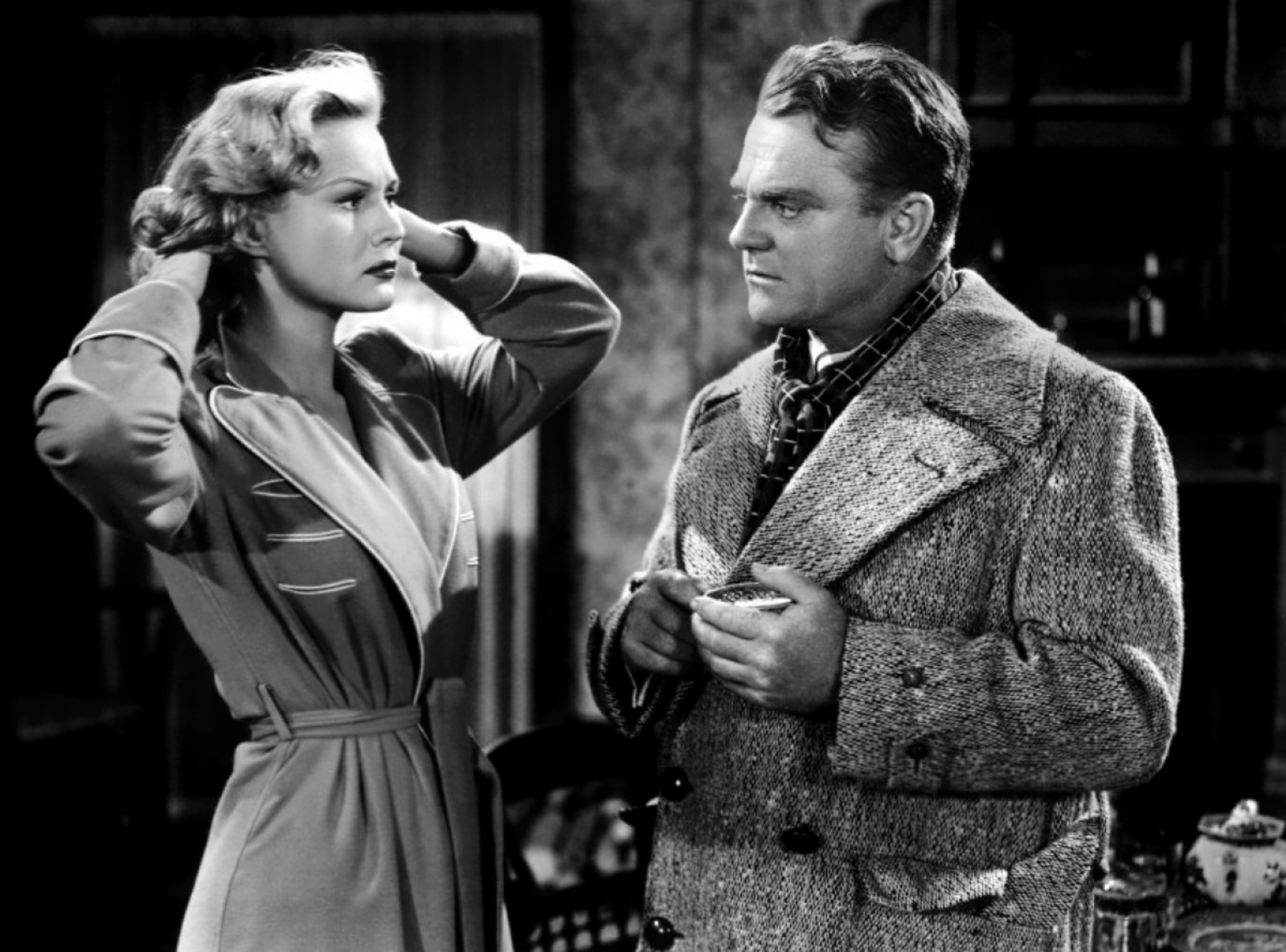
Virginia Mayo and James Cagney, "White Heat" (1949)

Virginia Mayo, also seen at the top of this post, had a way of getting under James Cagney's skin in "White Heat," one of only a handful of films noir to shoot on the Iverson Ranch.

Virginia Mayo

Any tension with Cagney's grumpy "White Heat" character was understandable — Mayo, who was another popular pinup girl during World War II, was clearly worth getting worked up about.

Virginia Mayo

The photogenic Mayo appeared in a number of Iverson Movie Ranch productions, including the 1954 Warner Bros. feature "King Richard and the Crusaders."

Abby Dalton

Abby Dalton was an unknown back in 1957 when Roger Corman cast her in the lead role in his Iverson Movie Ranch showpiece "The Saga of the Viking Women and Their Voyage to the Waters of the Great Sea Serpent."

Abby Dalton

Dalton was back at Iverson the following year in "Cole Younger, Gunfighter" before going on to a prolific career in television that included a long run on the prime-time soap opera "Falcon Crest" in the 1980s.

Mara Corday

Mara Corday offers another variation on the theme of "girls, guns and hay." Mara put in some time in the Westerns, including the 1957 20th Century-Fox feature "The Quiet Gun," filmed on the Iverson Ranch.


Believe it or not, we've barely scratched the surface when it comes to gorgeous women who worked the Iverson Ranch. Let me know if you like this sort of thing and I'll see what I can do to put together a Part 2.

Saturday, September 24, 2016

Anita Ekberg stars as "Valerie," filmed on the Upper Iverson by Oscar-Winning Cinematographer Ernest Laszlo — and a toast to Hugh O'Brian

I recently ran across the Sterling Hayden-Anita Ekberg Western "Valerie," a bigger-budget United Artists production filmed on location on the Iverson Movie Ranch in 1957.

Anita Ekberg and Sterling Hayden on the Iverson Ranch in a promo shot for "Valerie"

As one of the top Western stars of the 1950s, Sterling Hayden was a frequent presence on the Iverson Ranch back then. It was much more rare to see someone like Ekberg out riding the range.

Anita Ekberg in 1956 (promo shot for "Back From Eternity")

Not that there was anyone quite like Anita Ekberg. The Swedish bombshell was making a name for herself at the time as one of Hollywood's hottest new sex symbols. We'll take a closer look at her below, but first I want to talk about the Iverson Movie Ranch locations used in "Valerie." (Boy, are my priorities messed up!) 

"Valerie": Anita Ekberg and Peter Walker at the Midway House, on the Upper Iverson

The movie made ample use not only of Ekberg's sex appeal, but also of a number of Upper Iverson sets, including the Midway House, the Fury Barn and the Middle Iverson Ranch Set.

Peter Walker, seen here with Ekberg at the Midway House, plays Sterling Hayden's brother in "Valerie."

Peter Walker chats up Anita Ekberg on the front porch of the Midway House

Walker's character, Herb Garth, can't help being charming, but is he just being friendly with his brother's wife, or is it something more lascivious? 

Sterling Hayden keeps an eye on the Midway House in "Valerie"

Lurking in the shadows a short distance away, we see a jealous Sterling Hayden, as John Garth, spying on his wife and brother. The plot of the movie involves a "Rashomon"-like retelling of a brutal crime as it is tried in court.

Ekberg makes a hasty exit after she realizes her crazy husband has come a-calling

The movie's plot structure brings the viewer back repeatedly to the various filming locations as each witness offers an account of the events leading up to the crime. A location researcher could hardly ask for a better setup.

Overview of the Upper Iverson looking north from Cactus Hill, in "Valerie"

The movie also offers a number of wide shots of the Upper Iverson. In this one, both the Fury Barn and the Midway House can be seen, along with some significant rock features.

Fury Barn and Midway House, on the Upper Iverson

"Midway House" is my own name for the set where Ekberg and Walker are seen in the movie. The building is sometimes thought of as part of the Fury Set, although it's a ways south of the barn.

Key rock features also seen in the "Valerie" shot

Among the rock features captured in the shot are the Midway Rocks — so named because they're about midway between the Upper Iverson's North and South Rims — and the Three Stooges, located on the North Rim.

Here's a shot from "Valerie" that again captures both the Fury Barn and the Midway House — from a much closer angle this time.

Built for the TV series "Fury," the Fury Set was constructed starting in 1955, initially consisting of just the barn. A number of other buildings were added to the set over the next few years.

"Fury" TV series: The Fury Barn as the Broken Wheel Ranch

The Fury Barn appeared as the Newton family's beloved Broken Wheel Ranch in the TV show "Fury." The barn went on to be one of the Iverson Ranch's most widely filmed sets, turning up repeatedly in movies and TV shows before it was leveled by a massive wildfire in 1970.

The main cast of "Fury" at the Midway House in 1956; L-R: William Fawcett, Peter Graves
and Bobby Diamond ("Trial by Jury," premiered Oct. 27, 1956)

The Midway House first appeared in 1956, and even though it was set off a bit from the Fury Barn, it became the family home for "Fury's" Newton clan.

"Have Gun, Will Travel" (1958): The new "Fury Barn House" next to the Fury Barn

By 1958 a new house stood next to the Fury Barn. For a while I was calling this the "Fury House," but that's too confusing, considering that it was a different house, the Midway House, that served as the Newton family house in "Fury." I eventually settled on calling the new house the "Fury Barn House."

"The Gambler Wore a Gun" (United Artists, 1961)

The Fury Barn appears again in the Jim Davis Western "The Gambler Wore a Gun" in 1961, seen from an angle that's similar to the one used in "Fury," a few shots up from here.

A big difference between the two shots of the barn — first in "Fury" (four shots up from this one) and then about five years later in "The Gambler Wore a Gun" — is that the new Fury Barn House is now in place.

"The Gambler Wore a Gun": Fury Barn and Fury Barn House

Another shot from "The Gambler Wore a Gun" again shows the proximity of the new Fury Barn House to the barn. The new house had a minor role as Packy's house in later seasons of the TV show "Fury," but most of the angles used in the show, which aired from 1955-1960, suggest that when the Fury Barn was being filmed for "Fury," the crew was careful to avoid shooting the house.

"The Gambler Wore a Gun"

It's easy to mix up the Midway House and the Fury Barn House, which have some design elements in common. In the years after the "Fury" TV show wrapped, the Midway House was used mainly as a separate set, while the Fury Barn and Fury Barn House formed their own ranch set, generally called the "Fury Set."

This scene in "The Gambler Wore a Gun" captures a rare shot of all three structures in the same frame — the Fury Barn, Fury Barn House and Midway House.

"Valerie": Another look at the Fury Set area in 1957

The overviews seen in "Valerie," filmed before the construction of the Fury Barn House, give us a chance to compare what the Upper Iverson looked like before and after the house was built.

Sterling Hayden opens the gate to his ranch in "Valerie"

Some of the most interesting shots in "Valerie" are filmed from a vantage point near the top of Cactus Hill, where a gate was set up to represent the entrance to the Garth Ranch.

You may have already spotted the Fury Barn in this shot. Some readers might also recognize the familiar Iverson background features Oat Mountain and the Triangle Brand.

"Black Saddle" episode "Client: Braun" (premiered April 4, 1959)

Here's a shot of the same background area almost two years later, in the TV show "Black Saddle." The white building is the Fury Barn House, and the Fury Barn can also be seen, although it's harder to make out.

At first the two backgrounds may not look the same, which is explained by a number of factors, including a lower camera angle used in the "Black Saddle" sequence, which is also shot from farther east.

"Black Saddle": Two sections of road and a plateau area noted

Also complicating the comparison is the fact that the productions are shot at different times of the day, with the shadows falling in opposite directions. Seasonal differences are evident too, with more lush foliage seen in "Black Saddle" — especially in the "Road B" area.

"Valerie": The same markers help identify the spot

However, it's possible to identify common markers in the two shots. The same three features noted above in "Black Saddle" — two sections of road and a plateau — can also be found in the "Valerie" shot.

"The Brass Legend" (UA, 1956): The Upper Iverson about a year before "Valerie" was filmed

A comparison can also be made between the Upper Iverson as it appears in "Valerie" and what it looked like a little less than a year earlier, when the movie "The Brass Legend" was filmed in the same area.

In "The Brass Legend" we again see many of the same features noted in "Valerie." "The Brass Legend" and "Valerie" add up to something of an "Iverson period" for Gerd Oswald, who directed both movies.

"The Brass Legend," 1956: Midway House not yet built

The Upper Iverson overview in "The Brass Legend" reveals that the Midway House was not yet built as of late April 1956, when the movie was filmed.

"Valerie" (filmed in December 1956): Midway House in place

Another look at "Valerie" about eight months later shows the Midway House occupying the spot that was vacant in "The Brass Legend." I also couldn't help noticing how much more "barn-y" the Fury Barn looks with the door open.

Google aerial: Surviving rocks, along with the footprints of the old buildings

No remnant of any of the buildings exists today, but their footprints are approximated in this recent Google aerial. The Three Stooges and about half of the Midway Rocks have survived, but both features are now contained in the backyards of luxury estates and are inaccessible.

Main house on the Middle Iverson Ranch Set, in "Valerie"

Also featured in "Valerie" is the main house on the Middle Iverson Ranch Set, sometimes called the Halfway House. It is here that the grisly crime takes place, setting the plot in motion.

Front porch of the main house, or "Halfway House"

The movie features the house's southwest face, the more widely filmed of the building's two main fronts.

Some of the structure's design elements are similar to the look of both the Midway House and the Fury Barn House. Similarities among the structures were presumably intentional, making them somewhat interchangeable.

Middle Iverson's "Halfway House" from an eyewitness's perspective

Scenes in "Valerie" are often shot from behind the actors as their characters observe a particular setting, emphasizing that it is their perspective we're seeing, and not necessarily an objective reality.

Google aerial view: Footprints of the Middle Iverson Ranch Set

As with the other buildings discussed above, not a trace remains of the Middle Iverson Ranch Set. This recent Google aerial shows the approximate footprints of the set's main buildings, with the land now occupied by condos.

Wider view of the former Upper Iverson Movie Ranch

A wider aerial view shows the set areas depicted in the two maps above. I've also noted the Topanga interchange on the 118, the closest exit to the former Upper Iverson. The area can be accessed via Poema Place at the north end of Topanga, but the section above the condos is a gated community.

South Rim rock features, looking north from Cactus Hill

I was struck by some of the unusual camera angles seen in "Valerie," especially the movie's use of Cactus Hill.

This shot taken from Cactus Hill captures the rarely filmed rock feature I call "Gorilla," along with the far more widely filmed Turtle Rock. The angle of the shot is extremely rare.

"Five Guns West" (1955)

The only other production I know of that features a similar view of Gorilla is "Five Guns West," the first film directed by Roger Corman. The Corman movie shot later in the day, with the sunlight from the west helping to bring out more of the "gorilla" in Gorilla — seen near the right of the frame in this screen shot.

Turtle Rock and Gorilla in modern times

Here's a look at Turtle Rock and Gorilla in their contemporary setting, from a similar angle to those seen in "Valerie" and "Five Guns West." Once again, the evening light helps present Gorilla at its most "gorilla-like."

Driving past a rare rock on a "country lane" on Cactus Hill

Another unusual rock that turns up in "Valerie" is one I call Dire Wolf, which howls at Hayden and Ekberg, or their doubles, as they drive past.

This rock is almost never seen in productions, even though it's positioned next to one of the main trails along the northern edge of Cactus Hill.

Vintage dire wolf plastic replica by MPC

"Dire Wolf" refers to a perceived resemblance between the rock's "mouth" and the plastic dire wolf toys I had as a kid as part of my prehistoric animals collection. I'm aware that it's a stretch, and will add that it's only with some degree of embarrassment that I admit this.

"The Brass Legend" (United Artists, 1956) — Dire Wolf

I've spotted Dire Wolf in just one other production — "The Brass Legend." I'm sure it's no coincidence that it happens to be the other movie, along with "Valerie," from director Gerd Oswald's "Iverson period."

Dire Wolf in modern times

Here's a more recent shot of Dire Wolf. The wider the view of the rock, the less it looks like a dire wolf.

Hugh O'Brian as Sheriff Wade Addams in "The Brass Legend" (Upper Iverson)

While we're talking about "The Brass Legend," let's raise a glass to Hugh O'Brian, who starred in the movie. O'Brian, who was a fixture on the Iverson Ranch for years, died Sept. 5 at age 91.

O'Brian was best known as TV's Wyatt Earp, playing the Old West lawman for six seasons on the ABC series "The Life and Legend of Wyatt Earp."

Hugh O'Brian and Ray Boyle at Wyatt Earp Rock in the episode "Shoot to Kill"

O'Brian leans against the rock that was named for his character — Wyatt Earp Rock, on the Lower Iverson. Ray Boyle, who used the screen name Dirk London, played Wyatt's brother Morgan Earp.

"Shoot to Kill" (premiered Oct. 18, 1960)

With his trademark square jaw, O'Brian would have made a good Dick Tracy.

The triumvirate gathers at Rock Island on "The Life and Legend of Wyatt Earp"; L-R: Wyatt
(Hugh O'Brian), Doc Holliday (Douglas Fowler) and Shotgun Gibbs (Morgan Woodward)

In his later years, O'Brian was a frequent attendee at Western trade shows, cowboy star reunions and vintage TV festivals. He also founded the Hugh O'Brian Youth Leadership Foundation in support of high school scholars.

O'Brian married his girlfriend of 18 years, Virginia Barber, in 2006, when O'Brian was 81, and the couple collaborated on his memoir, "Hugh O'Brian, or What's Left of Him," published in 2014.

"Dodge City Gets a New Marshal" (Sept. 4, 1956) — O'Brian on the Lower Iverson

The "Wyatt Earp" TV show filmed extensively on the Iverson Ranch, preserving important images of the location ranch during what turned out to be the final half-decade or so of Iverson's "golden age."

Shooting up the Garden of the Gods Trail in "The Gatling Gun" (premiered Oct. 21, 1958)

O'Brian's "Wyatt Earp" premiered four days before "Gunsmoke," and has been cited as the first TV Western written for adults — but that didn't keep Wyatt from having a blast with a Gatling gun.

"The Brass Legend" (1956): Hugh O'Brian rides the Upper Iverson

This is just conjecture, but it's possible that it was O'Brian who brought the Iverson Ranch to the attention of director Gerd Oswald. "The Life and Legend of Wyatt Earp" had already been shooting on the ranch for a while when Oswald and O'Brian joined forces to work on "The Brass Legend."

Gerd Oswald, director of "The Brass Legend" and "Valerie"

With "The Brass Legend" wrapped, Oswald returned to Iverson the following year for the more ambitious "Valerie" — and this time he brought along reinforcements in the form of heavyweight cinematographer Ernest Laszlo.

Ernest Laszlo, behind camera, with Jackie Robinson and director Alfred E. Green, 
at work on "The Jackie Robinson Story" (1950)

The Hungarian-born Laszlo already had some gems on his resume as a director of photography — "Stalag 17" (1953), "The Naked Jungle" (1954) and "Kiss Me Deadly" (1955), to name a few.

Ernest Laszlo with his Oscar for Best Cinematography for "Ship of Fools" in 1966, 
flanked by presenters Kim Novak and Richard Johnson

Laszlo would go on to chalk up eight Oscar nominations, one Oscar win and a body of work that raised the bar for cinematographers. In the years following "Valerie," he filmed "Inherit the Wind," "Judgment at Nuremberg," "Baby, the Rain Must Fall," "It's a Mad, Mad, Mad, Mad World" ... the list goes on.

"Valerie" — Sterling Hayden in front of Turtle Rock on the Upper Iverson

Laszlo brought a keen eye to "Valerie," embracing the unique cinematic opportunities presented by filming on the Iverson Movie Ranch. It may be unintentional, but I couldn't help noticing that the pointed edge of Turtle Rock hovers menacingly close to Sterling Hayden's neck in this shot.

A piece of farm equipment becomes an artistic element on the Fury Set

A proponent of framing devices, Laszlo utilized the trees, rocks and farm implements he found on the location ranch.

Foliage and shadows add a subtle counterpoint to a shot of the Midway House

"Valerie": An unusual shot from inside the Fury Barn, looking toward the South Rim

The interior of the Fury Barn was rarely filmed, but Laszlo took his camera inside the structure to bring the audience into a shadowy corner of John Garth's world.

In an early sequence in "Valerie" filmed outside the Halfway House on the Middle Iverson Ranch Set, a tight shot of Garth suggests something bad is about to happen.

Anita Ekberg on the Upper Iverson — filmed near the Midway House

The artistic element that was Ekberg didn't escape Laszlo's notice either.

Anita Ekberg — Miss Sweden 1950

A little background on Ekberg ... as a teenager she won the Miss Sweden competition in 1950, earning a trip to the U.S. to compete in the Miss Universe pageant.

Ekberg in Life magazine in 1951

She wound up as a finalist for Miss Universe, an honor that brought her a contract with Universal Pictures. She immediately started getting attention, including being photographed for Life magazine.

Anita Ekberg in "Pickup Alley" (1957) — her last role before "Valerie"

Ekberg, who spoke almost no English when she arrived in the U.S., soon began building a resume as one of the sexiest leading ladies in Hollywood.

Ekberg in "La Dolce Vita" (1960)

When Ekberg turned up on the Iverson Ranch for "Valerie," she was still a few years away from the role that would make her an international sensation — playing Sylvia in Federico Fellini's "La Dolce Vita."

Anita Ekberg — early promo shoot

Producers clearly understood the appeal of Ekberg, and the gorgeous Swede showed little reluctance to maximize her exposure.

"Valerie": The newlyweds arrive home on Cactus Hill

In contrast to much of her career, Ekberg's exposure in "Valerie" was relatively buttoned-up. Even so, the actress added her own memorable accents to the usually barren Iverson Movie Ranch landscape.

For readers who might want to explore more about "Valerie," Anita Ekberg, Hugh O'Brian or Ernest Laszlo, I've included some links to Amazon at the bottom of this post.


This 1998 music video by Neil Finn includes one of the most unusual appearances ever by the Fury Barn — almost 30 years after it burned down.

You'll find links throughout this post to additional blog items about the Midway House, Fury Set and Middle Iverson Ranch Set. You may also want to click here to see a post about a Burt Reynolds photo shoot for "Gunsmoke" at the Fury Barn, or click here for more about the Fury Barn's appearance in the Neil Finn video.


Please click on the links above to go to Amazon.com if you're interested in purchasing DVDs, Blu-rays or books related to this blog post.