Why we love old movie locations — especially the Iverson Movie Ranch

For an introduction to this blog and to the growing interest in historic filming locations such as the Iverson Movie Ranch — the most widely filmed outdoor location in movie and TV history — please read the site's introductory post, found here.
• Your feedback is appreciated — please leave comments on any of the posts.
• To find specific rock features or look up movie titles, TV shows, actors and production people, see the "LABELS" section — the long alphabetical listing on the right side of the page, below.
• To join the MAILING LIST, send me an email at iversonfilmranch@aol.com and let me know you'd like to sign up.
• I've also begun a YouTube channel for Iverson Movie Ranch clips and other movie location videos, which you can get to by clicking here.
• Readers can email the webmaster at iversonfilmranch@aol.com
.

Showing posts with label Yvonne De Carlo. Show all posts

Sunday, February 19, 2017

Binders full of women: Fondly remembering a time when Hollywood hotties roamed the Iverson Movie Ranch

Virginia Mayo

Some of the hottest actresses of the 1930s, '40s and '50s — and please feel free to interpret the word "hottest" however it suits you — appeared in movies and TV shows filmed on the Iverson Movie Ranch.

Rita Hayworth

The tantalizing Rita Hayworth was one of a number of top actresses of Hollywood's Golden Age to pay her dues at the Chatsworth filming location.

"The Renegade Ranger" (1938): Rita Hayworth and George O'Brien on the Iverson Ranch

Hayworth's Iverson Movie Ranch portfolio includes starring opposite George O'Brien in the 1938 RKO Western "The Renegade Ranger." Here the two stars are seen in a publicity still taken north of Garden of the Gods.

Rita Hayworth

When it comes to picking great photos of Rita Hayworth, a gorgeous movie star who moonlighted as one of the top pinups of World War II, it's hard to narrow it down to just a few.

Rhonda Fleming

Rhonda Fleming had a busy Iverson Movie Ranch career, including appearing in the Iverson movies "Tennessee's Partner," "Alias Jesse James" and "Yankee Pasha."

Rhonda Fleming

Rhonda cleaned up nicely.

In fact, here's a shot of Rhonda cleaning up — nicely.

Gene Tierney with Randolph Scott on the Iverson Ranch in "Belle Starr," 1941

Gene Tierney worked the Iverson Ranch as the title character in 20th Century-Fox's "Belle Starr." She dressed down for the part of the none-too-glamorous outlaw — and if you've ever seen a photo of the real Belle Starr, you know the role would have been a stretch for Tierney, considered one of the most beautiful actresses of her era.

Gene Tierney: Hay, babe, how 'bout it?

Like other screen babes of the era, Tierney was expected at times to be photographed either in or near hay — and I have a hunch we'll be seeing more combinations of women and hay before we're through here.

Gene Tierney

Tierney also had her more glamorous photo shoots.

Loretta Young

Speaking of glamour, Loretta Young helped class up a number of Iverson movies, including starring with Gary Cooper in "Along Came Jones," a landmark production for the movie ranch filmed in 1944 and 1945.

"Along Came Jones": Loretta Young, Gary Cooper and William Demarest on the Iverson Western street

Loretta's sudden display of affection catches Gary Cooper off guard as William "He'll Always Be Uncle Charley" Demarest looks on in disbelief. Cooper, who both starred in and produced "Along Came Jones," had the town set built specifically for the movie in 1944.

Loretta Young

Loretta seems to have no idea what all the fuss is about.

Jane Russell

Did I mention hay? Jane Russell rolled around in it with a six-shooter in a series of iconic promo shots for Howard Hughes' 1943 Western "The Outlaw."

Jane Russell

"The Outlaw" was not filmed on the Iverson Ranch, but Russell starred in her share of Iverson movies — among them, "The Paleface," "Son of Paleface" and "Waco."

Dale Evans

Speaking of hotties on the hay, we think mostly pure thoughts about Dale Evans, remembered fondly as Mrs. Roy Rogers, Queen of the West. But there's a reason the King of the Cowboys warmed up to her in the first place.

Dale Evans and soulmate Roy Rogers

If anyone had been counting, Roy and Dale would hold the record for "most often filmed couple on the Iverson Ranch" — by a lot. They lived in Chatsworth in the '50s and '60s, just 10 minutes from the movie ranch, and filmed almost all of the outdoor action for "The Roy Rogers Show" on the ranch.

Dale Evans

Evans played more than her share of saloon girls before she hooked up with Roy.

Maureen O'Sullivan as "Jane"

From the Queen of the West to the Queen of the Jungle, Maureen O'Sullivan raised the bar for all future Janes in the "Tarzan" movies of the '30s, with a number of her jungle adventures filmed on the Iverson Ranch.

You Tarzan, me Jane ... we half-naked: Maureen O'Sullivan gives Johnny Weissmuller ideas

Maureen created a stir with her skimpy Jane outfits, which helped convince Hollywood to start enforcing the Hays Code once the censors got a good look at Maureen's body in "Tarzan and His Mate" in 1934.

"Tarzan's Secret Treasure" (1941): The Tarzan family in the Iverson Gorge

O'Sullivan still made a pretty hot Jane, even after the new production code — along with her new job title as surrogate mom to Boy — forced her to cover up some of her attributes from the mid-'30s on.

Anita Ekberg in "La Dolce Vita"

Before Swedish bombshell Anita Ekberg became an international sensation in the 1960 classic "La Dolce Vita," she had a tour de force performance in the title role of 1957's "Valerie," filmed on the Upper Iverson.

Anita Ekberg

Something about this unusual colorized photo of Ekberg just works.

Ekberg comes across as someone who's comfortable in her skin.

Yvonne De Carlo

Speaking of skin, I hope my readers can handle photos of a young, scantily clad — and not-exactly-clad — Lily Munster, aka the sumptuous Yvonne De Carlo. These racy pics from the 1940s go back to early in her career.

De Carlo was no older than her early 20s at the time. Within a few years she was at Iverson starring in Universal Westerns in the late 1940s, including playing Calamity in "Calamity Jane and Sam Bass."

Dorothy Malone

Then there's Dorothy Malone, who could drive men to madness as a brunette cowgirl or a blonde femme fatale ... or a blonde cowgirl, for that matter. Really pretty much however they dressed her up.

Dorothy Malone and Rock Hudson, "Tarnished Angels," 1957

Dorothy's Iverson resume includes "The Nevadan," with Randolph Scott, and two early Roger Corman movies from 1955 — the original "The Fast and the Furious" and the unfairly overlooked Western "Five Guns West."

Dorothy Malone and Jonathan Haze, "Five Guns West," 1955

Malone was put to extremely good use as Shalee, the unbearably seductive fuel for outlaws' passions in Roger Corman's first directorial effort, "Five Guns West," filmed on the Iverson Ranch and Ingram Ranch.

A young Dorothy Malone does her part for the war effort

What's that you say? More Dorothy Malone? You got it!

Dorothy Malone and Penny Edwards: Double your hot cowgirl pleasure

We also have Dorothy to thank for roping in Penny Edwards, as the two tag-teamed a memorable cowgirl photo shoot around the time they appeared together in Warner Bros.' 1948 release "Two Guys From Texas."

Penny Edwards: Um, what am I supposed to do with these?

Penny, who brought her own fireworks wherever she went, starred in a batch of Iverson productions — usually billed third after the lead cowboy and his horse.

Penny Edwards

Penny starred with Roy Rogers in "Trail of Robin Hood" (1950) and "Spoilers of the Plains" (1951), appeared opposite Rex Allen in "Utah Wagon Train" (1951) and worked with Allan "Rocky" Lane in "Captive of Billy the Kid" (1952) — all filmed on the Iverson Movie Ranch.

As a beautiful woman working in Westerns, Penny had her share of opportunities to get in the hay — let's just say a number of photographers apparently saw it as a metaphor.

Penny Edwards and co-star

It's easy to see why Penny got so much work in Westerns — she made a super-cute cowgirl.

Gale Robbins

While we're on the subject of super-cute cowgirls, how about a shout-out to the insanely hot Gale Robbins?

Gale Robbins

Gale's filmography includes the noteworthy Iverson Movie Ranch feature "Quantrill's Raiders" (1958), along with the late '50s TV shows "Trackdown" and "State Trooper," both of which shot at Iverson.

Peggie Castle

The gorgeous Peggie Castle was another frequent visitor to the Chatsworth location ranch, including appearing in "Son of Belle Starr" (1953), "The Oklahoma Woman" (1956) and "Hell's Crossroads" (1957).

Peggie Castle and John Russell, promo still for "Lawman," 1962

Peggie also had a regular role as saloon owner Lily Merrill, love interest for John Russell's Marshal Dan Troop, from 1959-1962 on "Lawman," another TV Western filmed on the Iverson Ranch.

"Beginning of the End" (1957): Peggie Castle and Peter Graves

When I was just a little kid — years before I would attain a level of "maturity" sufficient to fully appreciate Peggie Castle's hotness — said hotness was hiding in plain sight in one of my favorite "nature run amok" sci-fi movies of the '50s, "Beginning of the End." Back then all I cared about was the giant grasshoppers.

Viola Richard in the Garden of the Gods, "Flying Elephants" (1928)

Many readers may be unfamiliar with the beautiful Viola Richard, who had one of the nicest smiles of the silent film era. Viola shared the screen not only with comedy giants Laurel and Hardy, but also with the sandstone giants of the Iverson Ranch's Garden of the Gods.

Viola Richard

The sporty Viola was under contract to the Hal Roach Studios in the late 1920s, so her body of work consists almost entirely of silent comedy shorts.
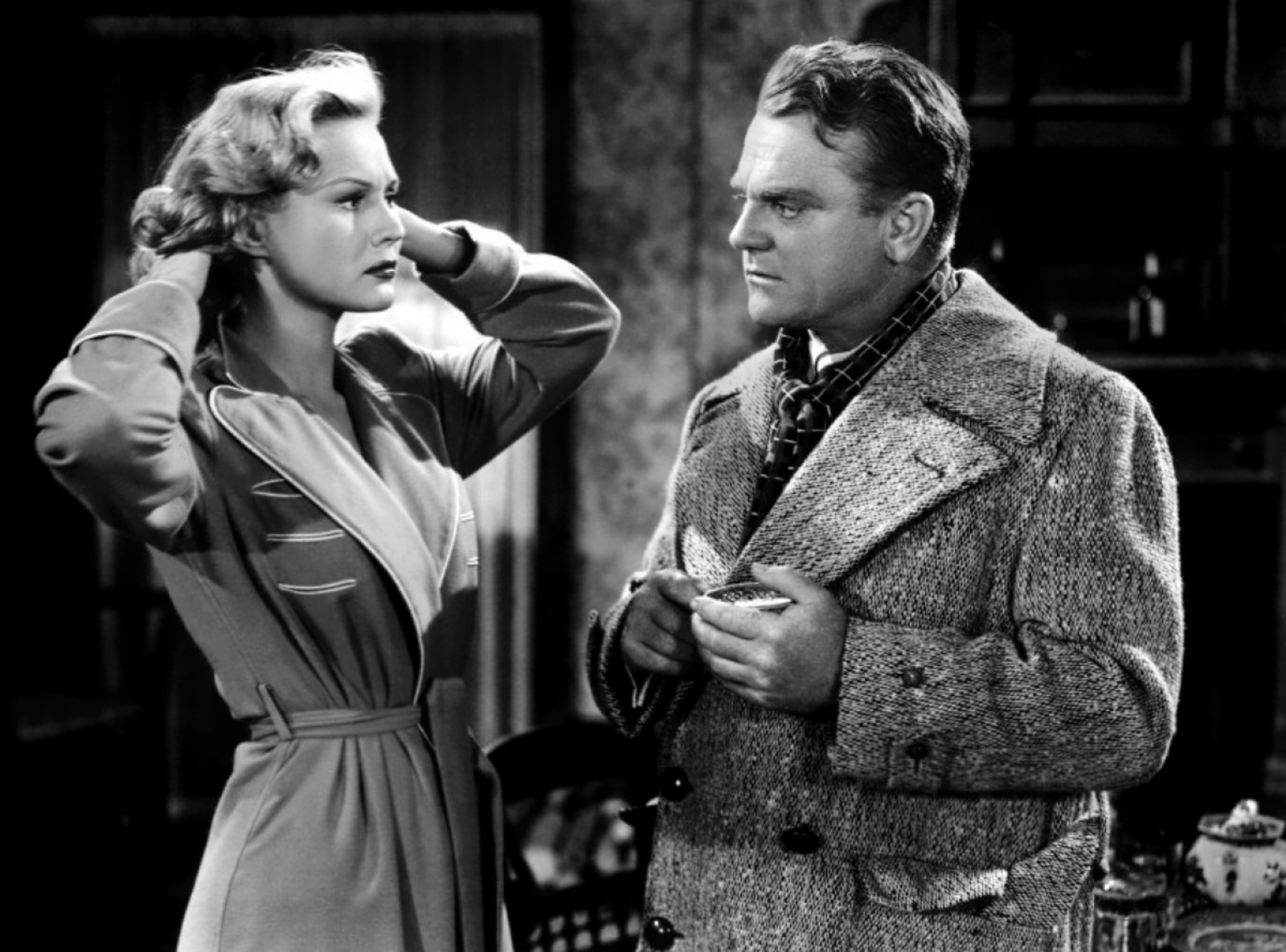
Virginia Mayo and James Cagney, "White Heat" (1949)

Virginia Mayo, also seen at the top of this post, had a way of getting under James Cagney's skin in "White Heat," one of only a handful of films noir to shoot on the Iverson Ranch.

Virginia Mayo

Any tension with Cagney's grumpy "White Heat" character was understandable — Mayo, who was another popular pinup girl during World War II, was clearly worth getting worked up about.

Virginia Mayo

The photogenic Mayo appeared in a number of Iverson Movie Ranch productions, including the 1954 Warner Bros. feature "King Richard and the Crusaders."

Abby Dalton

Abby Dalton was an unknown back in 1957 when Roger Corman cast her in the lead role in his Iverson Movie Ranch showpiece "The Saga of the Viking Women and Their Voyage to the Waters of the Great Sea Serpent."

Abby Dalton

Dalton was back at Iverson the following year in "Cole Younger, Gunfighter" before going on to a prolific career in television that included a long run on the prime-time soap opera "Falcon Crest" in the 1980s.

Mara Corday

Mara Corday offers another variation on the theme of "girls, guns and hay." Mara put in some time in the Westerns, including the 1957 20th Century-Fox feature "The Quiet Gun," filmed on the Iverson Ranch.


Believe it or not, we've barely scratched the surface when it comes to gorgeous women who worked the Iverson Ranch. Let me know if you like this sort of thing and I'll see what I can do to put together a Part 2.

Friday, January 23, 2015

The Iverson Movie Ranch Western street, one building at a time ... Part I: Casa Grande

"El Paso" (1949): Casa Grande, at the north end of Iverson's Western street

Casa Grande was an easy choice to lead off this series on the Iverson Movie Ranch Western street, because it's one of the most interesting and complex buildings in the town set. It wasn't part of the original set when the town was built in 1944, but was added a few years later and quickly became one of the iconic features of the set, occupying a high-profile position at the north end of the street.

"The Lone Ranger" (1949) — an early TV appearance by Casa Grande

This is probably the first appearance by Casa Grande on television, in an episode of the TV series "The Lone Ranger" called "The Renegades," which premiered Nov. 3, 1949. The building looks quite different here from its appearance around the same time in "El Paso," with wider pillars and a smaller roof over the porch area in "The Lone Ranger," along with a different configuration for the second story. But it's the same building in both photos.

In the "Lone Ranger" episode, Casa Grande serves as the base of operations for Father Batista, played by Wheaton Chambers. In this shot from "The Renegades" the Lone Ranger, played by Clayton Moore, confers with Father Batista in front of Casa Grande.

Another screen shot from "The Renegades" showcases one of the more "adobe-looking" corners of Casa Grande. Appearing alongside Father Batista is B-Western veteran Kenneth MacDonald, at right, playing Inspector Williams.

Kenneth MacDonald, left, vs. the Three Stooges

Among MacDonald's more than 400 credits in film and television, he had a recurring role as a sheriff on "The Range Rider" in the early 1950s and took his share of pies to the face as a frequent foil for the Three Stooges in their Columbia shorts of the 1940s.

"Calamity Jane and Sam Bass" (1949): looking north toward Casa Grande

The earliest productions I've been able to find that include Casa Grande are all from 1949, with the building surfacing both in films and on TV that year. The above shot of the Western street comes from the 1949 release "Calamity Jane and Sam Bass," starring Yvonne De Carlo as Calamity and Howard Duff as Sam.

The shot looks north along Iverson's Western street, with Casa Grande spread out across the end of the street. 1949 marks the beginning of what might be considered the peak period for the Iverson Western street, which had recently undergone extensive remodeling on the east side of the street, shown here.

Yvonne De Carlo as Calamity in "Calamity Jane and Sam Bass"

De Carlo is seen in front of Casa Grande in a screen shot from "Calamity Jane and Sam Bass." The building appears in the movie as the Exchange Hotel.

Yvonne De Carlo as Lily Munster

You may remember Yvonne De Carlo as Lily on "The Munsters."

"El Paso" (1949): Iverson Village, aka El Paso Street

Paramount's "El Paso" and Universal's "Calamity Jane and Sam Bass" came out just one month apart, with "Calamity" making it to theaters first. Following the release of "Calamity" on the Fourth of July, 1949, Paramount rolled out "El Paso" on Aug. 5. Both movies were filmed in Cinecolor, and both prominently featured Casa Grande and the Iverson town set.

"El Paso": the Iverson Western street as the town of El Paso, Texas

While the backstory on the construction of Casa Grande is not known, it's a good bet that the structure was built by Paramount for its John Payne-Sterling Hayden Western "El Paso." It comes down to either "El Paso" or "Calamity Jane and Sam Bass," and my money's on the Paramount production, which not only would have had the bigger budget of the two films, but also showcases Casa Grande far more extensively.

"Sky King" TV series (footage from 1955): aerial view of Iverson Village

Some readers may be disappointed to learn that Casa Grande was in reality a false front, as were other parts of the town set. The above aerial view, which comes from remarkable footage shot for the TV show "Sky King" that aired in a number of episodes of the series, exposes Casa Grande from the back, toward the right of the shot.

The "Sky King" shot reveals how Casa Grande was oriented at the northern end of the Western street. The street does not line up perfectly north and south, but "leans" a bit, running southwest to northeast. This bird's-eye view overlooks the layout from the east, and exposes Casa Grande's big secret: While the building may have looked impressive from the front, there wasn't much behind it.

This version of the "Sky King" shot identifies key features of the Western street, along with a cluster of buildings west of the town set, in the dotted green outline, that were left over from the 1937 Shirley Temple movie "Wee Willie Winkie." These old "Wee Willie Winkie" buildings, generally known as the India Fort, were filmed on several occasions in later years, but were used mainly as a fort in the late 1930s and early 1940s. You can read more about this spectacular fort set by clicking here.

"Calamity Jane and the Texan" (1950)

A little more than a year after Universal's release of "Calamity Jane and Sam Bass" came the similarly titled Columbia feature "Calamity Jane and the Texan," which again featured Casa Grande. As it did in "El Paso," Casa Grande again plays a cantina — the Prairie Queen this time, run by Calamity.

If the second story looks familiar, it's the same piece used in "The Lone Ranger," seen in a black-and-white photo near the top of this post. This "bolt-on" second story wound up being redesigned a few times over the years. This version apparently went on after the fancier "El Paso" setup was ditched, and this one didn't remain in use for long.

Almost as soon as it was built, Casa Grande became part of what could be described as a small adobe village at the north end of the town set. In another shot from "Calamity Jane and the Texan," we get a good look at an adobe wall that has been built adjacent to the main structure.

This wider shot from "Calamity Jane and the Texan" shows the bulk of Casa Grande, in the center and right portion of the shot, along with part of the adobe wall, above the horses on the left. Smooth Hill looms in the background.

Here's another angle on Casa Grande from "Calamity Jane and the Texan," with this shot revealing some of the rough texture of the bricks that decorate the building's exterior. In this shot we can also see that the adobe wall on the left juts out from the main structure at an angle.

"Calamity Jane and the Texan" — Evelyn Ankers as Calamity

Originally released under the title "The Texan Meets Calamity Jane," the Columbia picture featured Evelyn Ankers in the role of Calamity. Here Ankers stands at the top of the stairs outside the saloon, near the south end of town.

Ankers continued a tradition of glamorized Hollywood versions of Calamity Jane. In this shot taken on the Upper Iverson, Calamity mourns the death of Wild Bill Hickok, and we see a little bit of veteran character actor Lee "Lasses" White as her friend Colorado Charlie. The scene takes place at the grave of Wild Bill, which I've blogged about before. Please click here for pictures and details about Wild Bill Hickok's gravesite on the Iverson Ranch.

Martha Jane Cannary — the real Calamity Jane

The real Calamity Jane — born Martha Jane Cannary or Canary — may not have looked quite the part of a movie star, but she was a true frontierswoman and a formidable presence in her own right.

"Gold Raiders" (The Three Stooges, 1951)

In the Three Stooges movie "Gold Raiders," Casa Grande resurfaces as "Acme House," and at this point the building has yet another configuration for its second story. This version of the second story is a hybrid — half adobe and half wooden building.

"Flaming Feather" (Paramount, 1952)

Filmed around the same time as "Gold Raiders" but released the following year, Paramount's color production "Flaming Feather" uses much of the same signage seen in the Stooges movie and offers a better look at the "split personality" of Casa Grande's new second story — adobe on the left, wood on the right. This configuration, minus the Acme House sign, would remain in use for much of the rest of the building's lifespan.

"Wagon Team" (Gene Autry, 1952)

In "Wagon Team," released the same year as "Flaming Feather," the building's adobe qualities are brought to the forefront. The second story was still in place, but this sequence shoots around it, focusing on the single-story left half of the building along with the familiar low adobe wall to its left. It's clear in this shot that the adobe wall, which occupies the left portion of the frame, is supposed to look like a building.

"Annie Oakley" TV series (1954): A small adobe village at the north end of the street

This shot from an episode of "Annie Oakley" titled "Justice Guns" shows off the adobe characteristics of that whole north end of the Western street — even without the adobe wall next to Casa Grande being visible in this photo. The "Annie Oakley" episode premiered April 17, 1954.

The main buildings making up the "adobe village" part of Iverson's Western street

Combining with Casa Grande to create the adobe village were a couple of small adobes that had been in place for years on the western side of the street. Here's the "Annie Oakley" shot again with those buildings, the North Adobe and the South Adobe, identified. I will discuss these structures in detail in upcoming entries in this series.

Iverson Village before Casa Grande ... 


"Cheyenne Takes Over" (1947)

This is what the north end of town looked like back in 1947, in the Lash LaRue movie "Cheyenne Takes Over," a couple of years before Casa Grande was built. The north end of town was wide open, with Center Rock visible in the background.

Center Rock is identified here, along with Oat Mountain in the distance. Once Casa Grande was in place, Center Rock could no longer be readily seen from the town. Also noted here is Pond Rock, which remained a feature of the town set throughout the set's existence. Pond Rock was typically hidden in the background behind the General Store, which is partially visible here.

"Check Your Guns" (1948): The north end of town

A year or so later, the Eddie Dean movie "Check Your Guns" again featured Iverson Village. This was soon before Casa Grande was built, and the north end of town remained vacant, with a virtually unblocked view of Smooth Hill. 


"The Iverson Movie Ranch Western street, one building at a time" is a series of posts on the movie and TV history of each of the major structures making up Iverson's town set, which stood from 1944 to 1957 and appeared in hundreds of productions.


To see all of the posts in the series on the Iverson Western street, please click on the following links:

Part I: Casa Grande
Part II: The Livery Stable
Part III: The Saloon
Part IV: The Hotel
Part V: The General Store 
Part VI: The Barn
Part VII: The Sheriff's Office
Part VIII: The North and South Adobes
Part IX: The Lost Dutchman
Part X: The original north end of town
Part XI: The North and South Towers
Part XII: The Harness Maker
Part XIII: Rainbow Mine Co. 
Part XIV: The Church/Schoolhouse  
Part XV: The Corral Rocks Shack
Part XVI: The decline and fall of the Western street

For additional material on the Iverson Western street, you can click here to see a previous entry on the north end of town, or here for a post examining the south end of town.